Brief introduction to existing community based education managed by CDPH
Community field programs is required in a real life setting with the specific aim of developing students' competencies in understanding health problems in the community and to be able to work with the community in tackling health problems. Therefore, the field activities are designed to be need-responsive, problem solving and community-based which encourages students to render services while they learn and develop public health management and communication skills. CBE operates under the overall leadership of the Head of the CDPH.
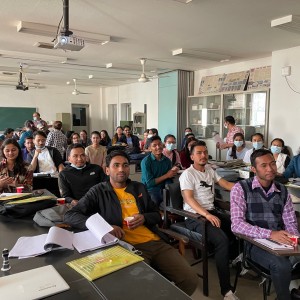
CBE (Community Based Education) Unit
It comprises a team to coordinate with the Central Department administration, review and organize field programs, conduct feasibility studies and plan for the supervision of field programs of all academic programs according to curricula of both Bachelor and Master levels. All field activities are implemented according to separate operational guidelines developed by the Department.
Community Health Diagnosis field program
The community health diagnosis field program is conducted in the second year in BPH. The students are sent in a group of 10 students to conduct the field activities after a field orientation program. The main activities of this field program are data collection, analysis, presentation and intervention of health education program in the community.
The community health diagnosis field program is one month residential field program. The main objectives of the program are:
- To apply the theoretical knowledge in field
- To work in groups with team spirit
- To identify the main health problems of the community
- To prioritize the health problems and present the findings to the community with appropriate recommendations
- To plan and implement Micro Health Project (MHP) in collaboration with the community to ensure sustainability
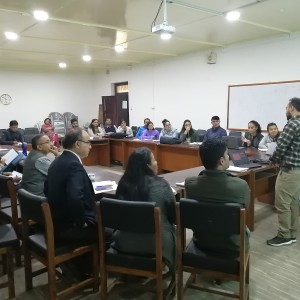
Health Systems Management field program
The municipal health systems residential field provides the students an opportunity to develop skills which will make them a competent public health professional with the ability to identify health problems and needs of the community. This course also enables them to assess resource potentials and constraints, prioritize the health problems and set strategies for solving them, collaborate to develop suitable options and action plans for addressing the health problems in district. They will also be able learn the management of promotive, preventive, curative and rehabilitative health services as part of the municipal health team.
Students will learn supervision and monitoring of health programs, developing action plans for feasible and effective solution to problems found in collaboration with the local stakeholders.
The total duration of this residential field is 60 days in the municipal health systems. One group composed 5-6 students will be sent to the field.
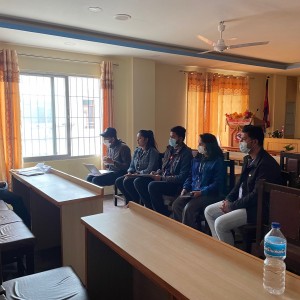
Comprehensive Public Health Practicum – Organization Based Program
The Comprehensive Public Health Practicum is viewed as the culminating experience of the Bachelor of Public Health (BPH) academic program. It provides students with the opportunity to apply theoretical knowledge in a real life professional public health setting.
The course duration is four months and carries a total of 400 marks, reflecting the extensive practical experience gained through field engagement and institutional collaboration.
Students develop skills in systems analysis, leadership, community mobilization, and evaluation of public health services considering effectiveness, efficiency, equity, and social justice.
The practicum can take place at district, regional, or central level organizations including governmental, nongovernmental, and private sector institutions working in public health.